
Food Packaging Bags Leaking? Not Always the Bag’s Fault
Why Your Food Packaging Bags Are Leaking (And How to Fix It Forever)
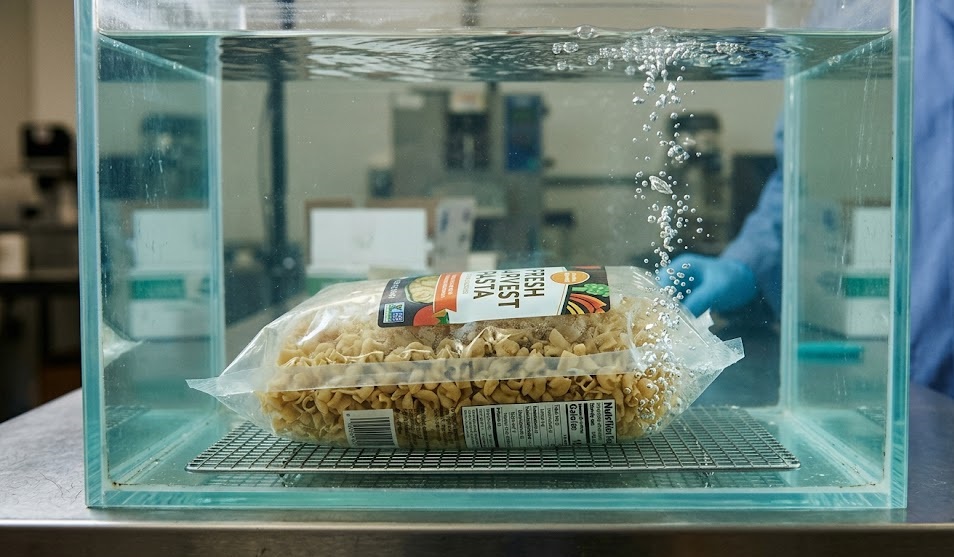
Last week, a regular client called us, sounding stressed: “GalePack, your spout pouch is leaking! I pressurized it and the air just escaped!”
We asked him to send the test details. Turns out he pushed the bag to 8.5 bar — while our factory standard test is 6 bar.
This is the #1 reason for “leaking bag” complaints in the food packaging industry. Most of the time it’s not a quality issue with the bag. It’s a mismatch between test pressure, material choice, and real-world use.
After 20 years as a custom food packaging bags manufacturer, we’ve seen this exact situation hundreds of times. Today I’m sharing the truth behind leaking pouches, a real client story, and a simple 4-step “How To” guide so you can test and fix the problem yourself — before it turns into a costly dispute.
Why Our Factory Tests at 6 Bar (And Why Clients Often Go Higher)
At GalePack, every batch of stand-up pouches, spout pouches, and kraft zipper pouches goes through an air pressure leak test (ASTM F1140 standard).
We fill the bag with air, pressurize it to 6 bar (87 psi), hold for 30 seconds, and check for bubbles or pressure drop at the seals, zipper, or spout.
This 6 bar standard covers 90% of normal shipping, stacking, and retail conditions for coffee, nuts, sauces, pet food, and snacks.
But many clients run their own “extreme” tests at 7–10 bar, or test in 60°C heat and high humidity. Of course the bag “leaks.”
We can make bags that handle 10+ bar — we do it all the time for heavy sauces and industrial liquids — but it adds 15–25% to the cost and is usually overkill for regular food products.
So the first question we always ask when we get a “leaking” complaint is: “What pressure and conditions did you test at?”
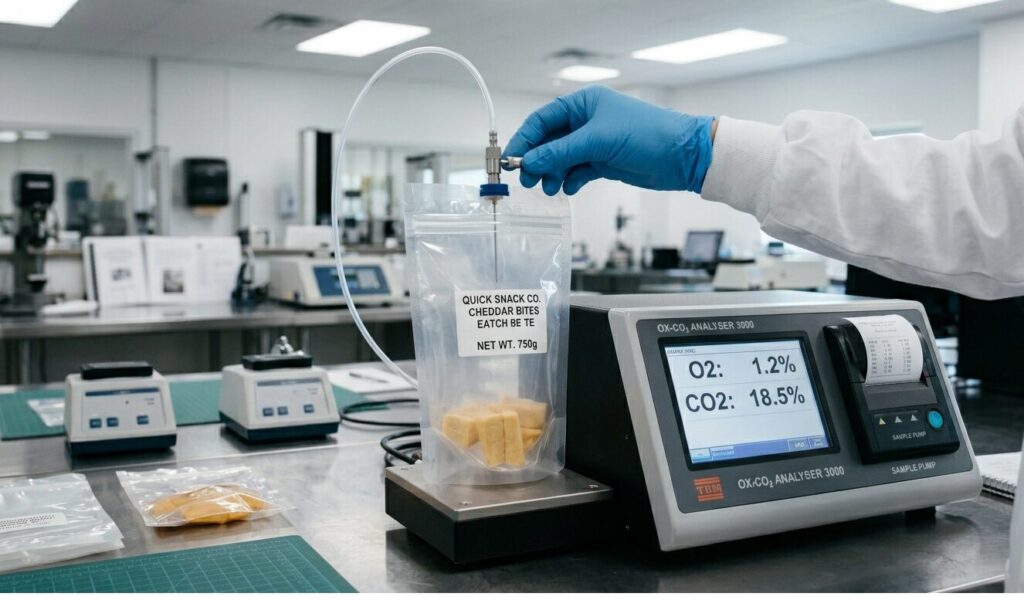
Real Client Story: Same Spout Pouch, Two Totally Different Results
Last year we supplied 100,000 spout pouches to a U.S. sauce brand. Material: PET/AL/PE, spout seal strength 6.2 bar.
Client A (retail squeeze sauces) told us: “Never had a single leak. Customers love how easy it is to squeeze!”
Client B (industrial flavoring) emailed: “Your bags are leaking!”
Investigation showed Client B was testing at 9 bar and storing samples at 60°C for 48 hours.
We quickly switched them to our reinforced spout version (thicker 120μm seal layer + stronger silicone nozzle). New seal strength: 9.5 bar. Zero complaints since.
Lesson learned: There is no such thing as a “100% leak-proof bag” for every situation. There is only the right bag for your real use case.
How To: 4 Easy Steps to Check If Your Food Packaging Bags Are Really Leaking
Stop arguing with suppliers. Run this quick self-test yourself (takes 10 minutes and you can do it in your office or warehouse):
- bar air pressure leak test for custom food packaging bags manufacturer
How much stacking or vibration will the bag face during shipping?
Is it liquid (needs spout) or dry product?
How will end customers use it — squeeze hard, store upside down, or microwave? - Do the simple “water bath pressure test” (anyone can do this)
Fill the sample bag with air (or your actual product).
Seal it completely.
Submerge it in a basin of water.
Slowly pressurize to the maximum pressure you expect in real life (e.g. 7 bar).
Hold for 30 seconds and watch for bubbles at the seals. → Bubbles = you need stronger seals or different material. - Check the 3 most common leak points
Heat-seal edges (most frequent)
Zipper closure
Spout-to-bag connection (biggest issue on spout pouches) - Choose the right structure for your needs (GalePack recommendations)
Standard liquids/snacks → PET/AL/PE + reinforced heat seal (6–8 bar)
High-pressure squeeze sauces → PET/NY/PE + wide seal + reinforced silicone spout (up to 10 bar)
Multiple squeezes → Double zipper + anti-leak valve
Eco-friendly requirement → Mono-material PE with high-strength seal (still PFAS-free and reaches 8 bar)
Complete these 4 steps and you’ll know immediately whether it’s the bag or the test method.
How GalePack Solves Leaking Problems for Good
We never promise “our bags never leak” — that would be dishonest.
Instead, we ask about your exact product, filling method, shipping route, and test standard. Then we offer three clear options:
- Standard version – 6 bar, best price, perfect for 90% of food products
- Reinforced version – 8–9 bar, thicker seals, +18% cost
- Heavy-duty version – 10+ bar, new lamination tech + full SGS test report
Every order includes:
- Air pressure test report (you can forward to your customers)
- Free samples in 7 days
- 100% pressure inspection before shipment
In the last 3 years we’ve helped 47 clients who were facing returns because of “leaking” complaints. After switching to the right specification, their return rate dropped from 6.8% to 0.3%.
Ready to Stop Leaking Issues Once and for All?
Your food deserves packaging that actually protects it — not packaging that causes headaches.
Tell us your product type, pack size, and real test pressure. We’ll send you 5 free samples at different strength levels within 24 hours.
Just contact us by click here with the subject “Leak-proof sample request.”
We’ve been making custom food packaging bags leak-proof for real-world use for 20+ years. Let’s make sure your next order never gets another “leaking” phone call.
GalePack – Packaging that stays sealed, so your brand stays trusted.