
Why Choose the Right Custom Food Packaging Bags Manufacturer in 2026
If you’re running a food brand — whether it’s specialty coffee, organic snacks, sauces, or pet treats — your packaging isn’t just a bag. It’s the first thing customers touch, the thing that keeps your product fresh on the shelf, and often what decides if they buy again. As a custom food packaging bags manufacturer with over a decade in the industry, I’ve seen too many good products fail because the packaging let them down. In this guide, I’ll walk you through what really matters when sourcing custom food packaging bags, the options that actually work in today’s market, and practical tips to avoid common headaches.
You probably landed here because you’re tired of dealing with minimum orders that are too high, quality that varies between shipments, or bags that look great in samples but fall apart in real life. Let’s fix that.
What Makes a Good Custom Food Packaging Bags Manufacturer Stand Out
Over the years, I’ve worked with hundreds of brands from startups to established exporters. The difference between a reliable partner and one that causes nightmares usually comes down to a few key things.
First, real manufacturing capability. A true custom food packaging bags manufacturer should have their own factory with in-house printing, lamination, and quality control. Not just a trading company that outsources everything. When I visit supplier facilities, I always check for dust-free workshops and proper testing labs. These aren’t fancy extras — they directly affect whether your bags meet FDA standards and stay consistent.
Second, flexibility on order sizes. Many manufacturers still push for 20,000+ pieces minimum. For small brands testing new flavors or entering new markets, that’s risky. Good partners now offer MOQs as low as 5,000 pieces while keeping quality high.
Third, speed without sacrificing safety. With supply chains still unpredictable, you need production times around 7-15 days, not months. But speed only matters if the bags pass food safety tests.
I’ve had clients come to me after bad experiences where cheap bags caused leaks or off-gassing that ruined entire batches. Those situations are expensive and damage trust.
Stand Up Pouches: Still the Most Popular Choice for a Reason
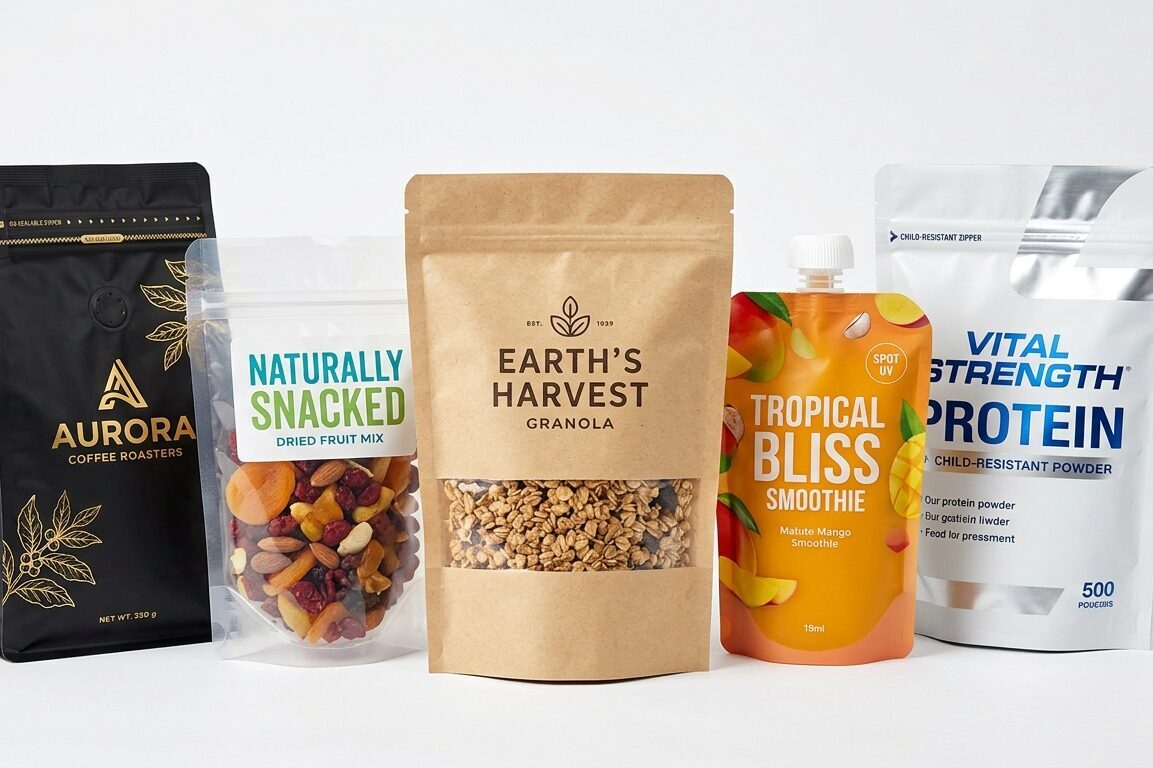
Stand up pouches remain the go-to for most food brands, and for good reason. They stand proudly on shelves, take up less space when shipped flat, and give you plenty of room for eye-catching designs.
From my experience, the best stand up pouches use multi-layer structures like PET/AL/PE or PET/VMPET/PE. The aluminum layer gives excellent barrier properties against oxygen, moisture, and light — crucial for keeping coffee beans aromatic or dried fruits from getting stale.
One client I worked with switched from rigid boxes to custom stand up pouches with zippers. Their shipping costs dropped by almost 40%, and shelf visibility improved so much that sales jumped noticeably in the first quarter.
Key features worth paying for in stand up pouches:
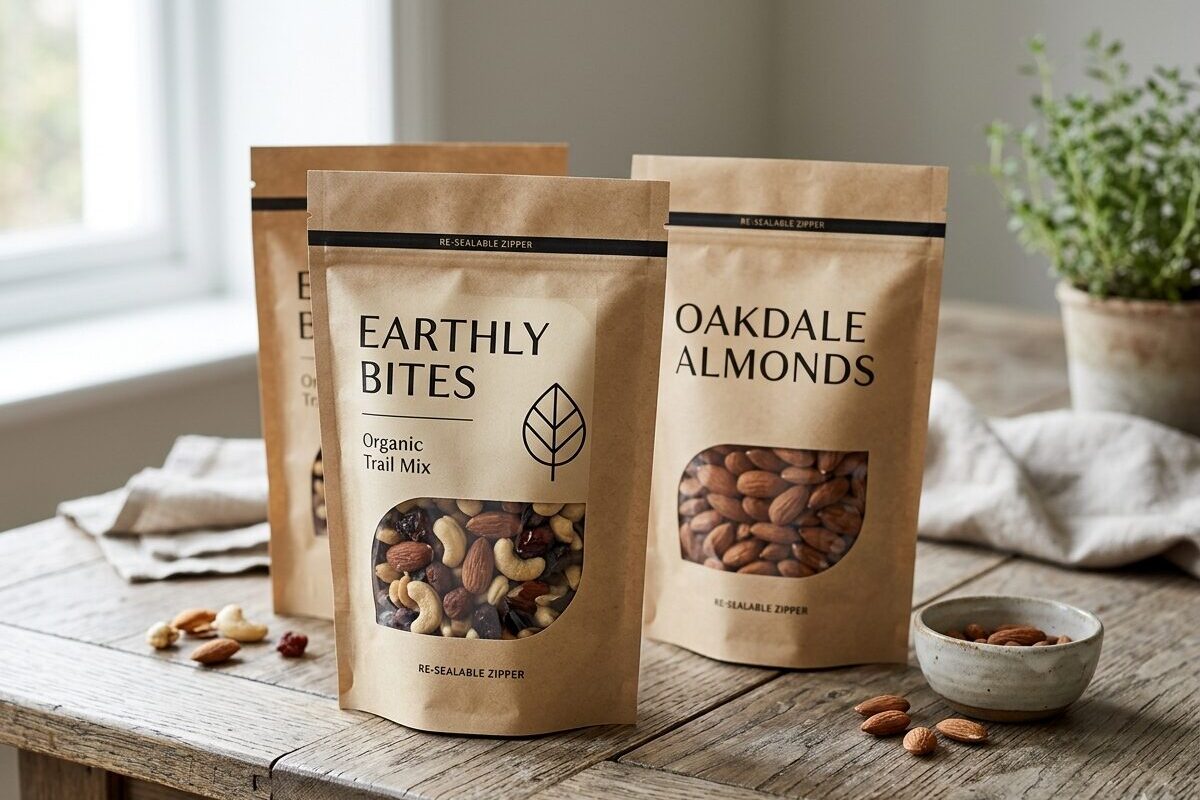
- Resealable zippers (make sure they’re sturdy — cheap ones break after 5-10 uses)
- Tear notches for easy opening
- Clear windows so customers can see the product
- Matte or glossy finishes depending on your brand vibe
- Bottom gussets that actually hold shape after filling
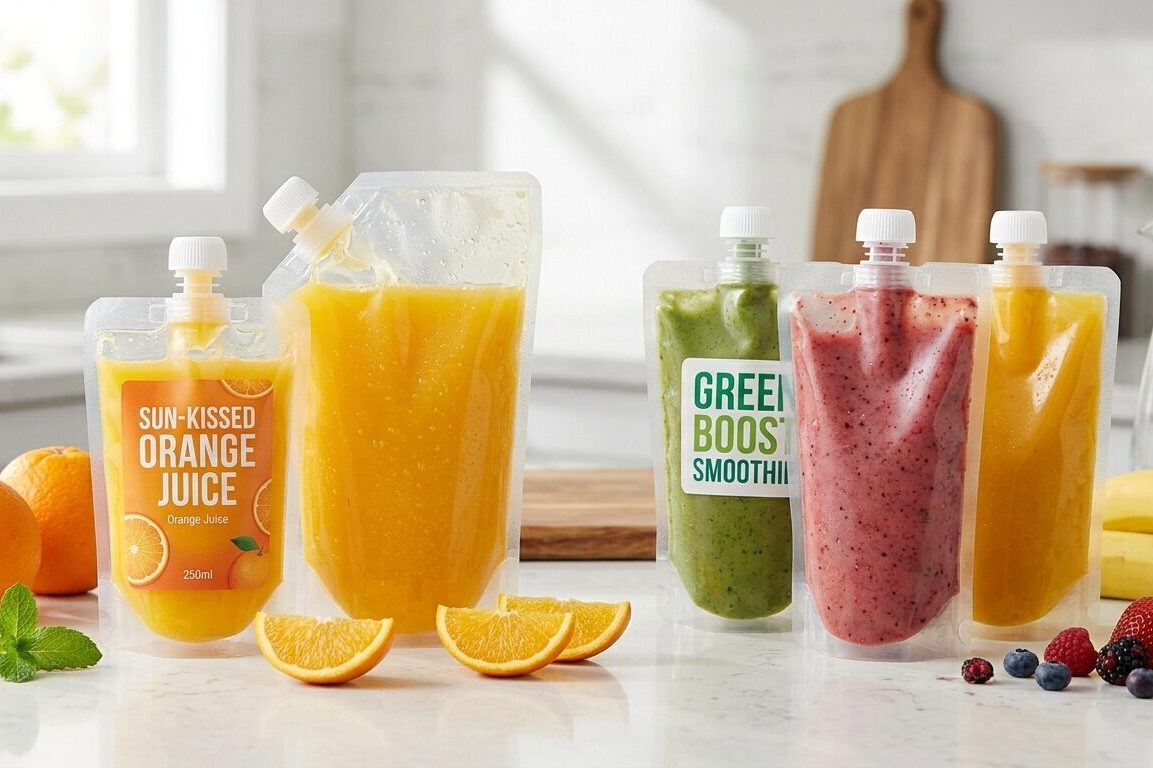
If you’re packaging liquids or semi-liquids, consider spout pouches instead. These have become huge for sauces, juices, and baby food because they’re convenient and reduce mess.
Spout Pouches and Specialty Options for Different Food Types
Not every product fits neatly into a standard stand up pouch. That’s where customization really shines.
Spout pouches work amazingly well for beverages, condiments, and gels. The spout needs to be food-grade, leak-proof, and easy to drink or squeeze from. I’ve tested dozens over the years — the ones with stronger heat seals and thicker nozzles hold up best during shipping.
For premium snacks or pet food, 8-side seal bags or flat bottom pouches give a more luxurious look and better stability. They stand straighter and hold more volume without tipping over.
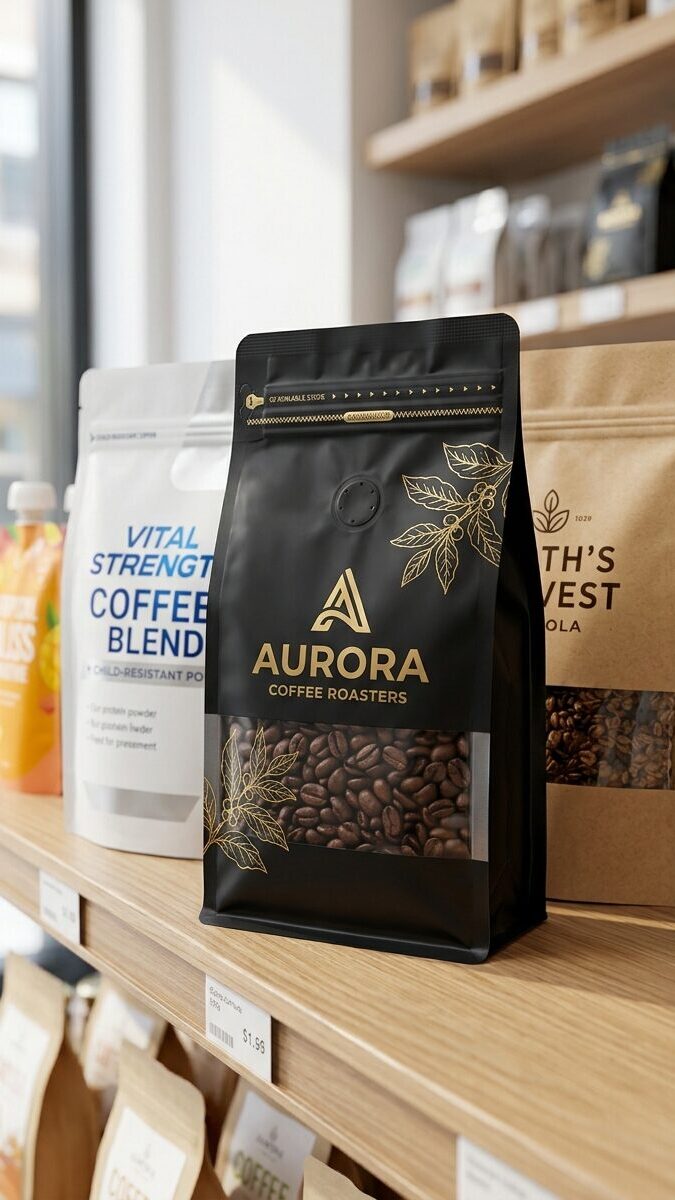
Kraft paper bags are trending strong right now, especially for organic and “natural” positioning. But here’s something many people don’t realize: pure kraft often lacks barrier properties. The smart move is kraft look with actual barrier layers inside — like kraft/PE or kraft/aluminum structures. This way you get the earthy aesthetic without compromising freshness.
Unique shaped pouches can be game-changers for gift sets or kids’ products. I’ve seen brands double their social media shares just by using heart-shaped or bottle-shaped bags during holiday seasons.
Material Choices: Food Safety, Sustainability, and Performance
This is where a lot of brands get overwhelmed. There are so many material options, and the wrong choice can lead to compliance issues or poor shelf life.
Food-grade requirements are non-negotiable. Look for manufacturers who provide full test reports for FDA, EU, LFGB, and REACH. BPA-free and PFAS-free should be standard now, not an upgrade.
On the sustainability side, mono-material structures are gaining traction because they’re easier to recycle. Many brands are moving toward recyclable PE or PP-based films. It’s not perfect yet — recycling infrastructure varies by country — but it’s a step most retailers appreciate.
From what I’ve seen working with European and US buyers, transparency about materials matters more than perfection. Customers want to know what they’re getting, and big platforms like Amazon have stricter rules every year.
Thickness is another detail people underestimate. 80-120 microns works for light snacks, but for heavier products or ones needing longer shelf life, 150-200 microns is safer. The extra cost is usually worth it to avoid complaints about punctures or leaks.
How to Work Effectively with Your Custom Food Packaging Bags Manufacturer
Good communication makes all the difference. Here’s my practical advice after years of bridging factories and brands:
- Start with clear specifications. Share your product details — weight, shelf life needed, storage conditions, and target markets. This helps the manufacturer suggest the right structure.
- Request samples early. Don’t skip this step. Always test samples with your actual product under real conditions. I once had a client discover that their oily snacks made certain inks smear — we caught it in sampling and fixed it before production.
- Discuss artwork requirements upfront. High-resolution printing (up to 10 colors) is standard with good manufacturers, but file formats and color matching need attention.
- Ask about quality control processes. A solid custom food packaging bags manufacturer should inspect 100% of bags before shipping and provide photos or videos of production if requested.
- Plan for future orders. Once you find a good partner, locking in consistent quality and pricing becomes easier with longer-term relationships.
Many of my clients started small and scaled up successfully because they chose partners who grew with them.
Current Trends Shaping Custom Food Packaging in 2026
Sustainability isn’t going away. More brands are asking for lightweight designs that use less plastic while maintaining performance. Recyclable and compostable options are maturing, though they still cost more.
Digital printing is making smaller runs more affordable with less waste. This helps when you’re testing limited editions or seasonal flavors.
Convenience features like easy-open and resealable closures matter more as people buy more online and on-the-go.
Premium textures and finishes — soft-touch matte, spot UV, embossing — help products stand out in crowded categories. But they need to be done right, or they add cost without real impact.
I’ve noticed that brands telling their story through packaging (origin, ingredients, values) perform better. Packaging has become part of the brand experience, not just protection.
Common Mistakes to Avoid When Sourcing Packaging
Let me save you some pain. Here are issues I see repeatedly:
- Choosing purely on price. The cheapest option often ends up costing more in returns, damaged reputation, or delayed shipments.
- Ignoring shipping conditions. Bags that work in a controlled factory might fail in hot containers during ocean shipping.
- Skipping compliance checks for your target markets. What passes in one country might need extra certifications elsewhere.
- Poor design that doesn’t consider how the bag will be displayed or used.
One brand I helped had beautiful printing but weak seals. Their return rate was high until we strengthened the structure. Small changes like that can make a big difference to your bottom line.
What to Expect from a Reliable Partner Like GalePack
After working in this industry for years, I’ve learned that trust comes from consistent delivery. A good custom food packaging bags manufacturer should offer free design support, fast quotes, and honest advice even when it means recommending something different than what you initially asked for.
Look for partners with proper certifications, real factory photos, and transparent processes. The best ones treat your brand’s success as their own.
At the end of the day, great packaging protects your product, tells your story, and helps you compete. It shouldn’t be a source of stress.
If you’re in the process of developing or improving your food packaging, I’d love to hear what challenges you’re facing. What type of products are you packaging right now, and what’s your biggest headache with current suppliers? Drop a comment below or reach out — sometimes a quick conversation can save months of trial and error.
Finding the right custom food packaging bags manufacturer is one of the smartest investments you can make for your food brand. Choose carefully, test thoroughly, and build a relationship that lasts. Your products deserve packaging that works as hard as you do.