

How to Prevent Pet Food Pouches from Tearing During Shipping
If you sell pet food online or ship to retailers, there’s nothing more frustrating than opening a box only to find torn pouches, spilled kibble, and unhappy customers. As someone who’s helped hundreds of pet brands with custom packaging over the past ten years, I’ve seen this problem way too often. Torn pet food pouches don’t just create mess — they lead to returns, bad reviews, and wasted product.
In this guide, I’ll share practical, battle-tested ways to stop your stand-up pouches and other pet food bags from tearing in transit. Whether you’re a small brand just starting out or scaling up shipments, these tips will help you protect your products and your reputation.
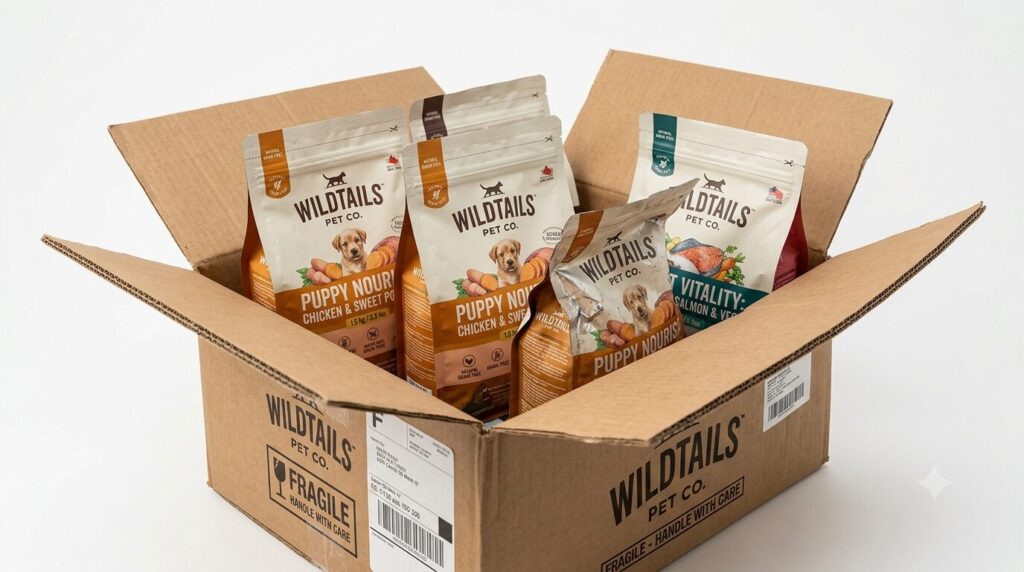
Why Pet Food Pouches Tear So Easily During Shipping
Pet food has its own unique challenges. Dry kibble and treats have sharp edges that act like tiny knives inside the bag. When boxes get stacked, dropped, or vibrated during long truck rides, those edges push against the material and create punctures or tears.
From my experience, most tearing happens in three stages: during packing at your facility, in the carrier’s sorting hubs, and on the final delivery van. Large bags for big dogs are especially vulnerable because they’re heavier and get handled more roughly.
Many brands come to me after a bad batch, saying their previous supplier’s bags looked fine in samples but failed in real shipping. The difference usually comes down to material thickness, structure, and how the bags are prepared for transit.
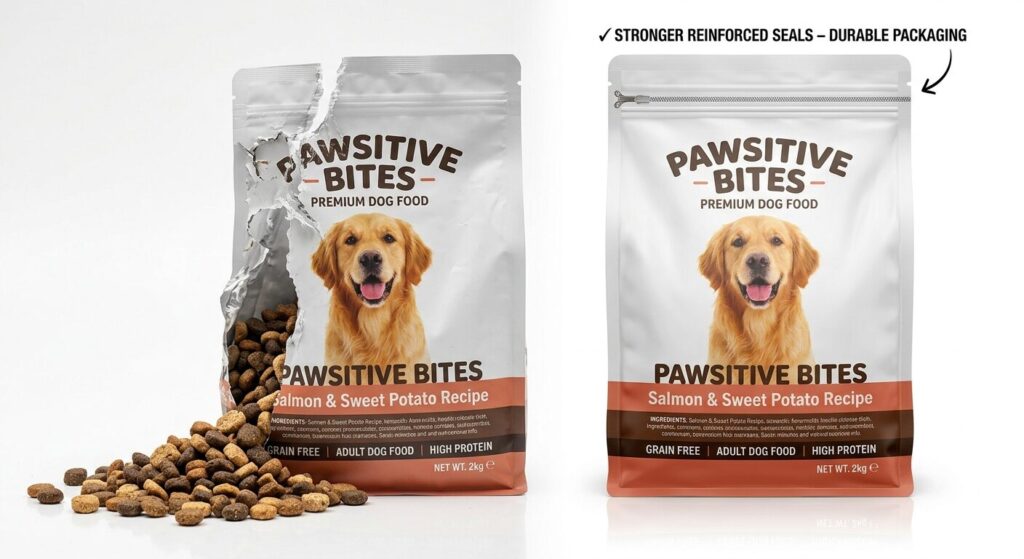
Choose the Right Material and Structure for Durability
Not all pouches are created equal when it comes to shipping. For pet food, I always recommend multi-layer structures with good puncture resistance.
Key material recommendations:
- Thickness: Go for at least 120-150 microns for medium bags, and 160-200 microns for larger ones (over 5kg). Thinner films save money upfront but cost you later in damages.
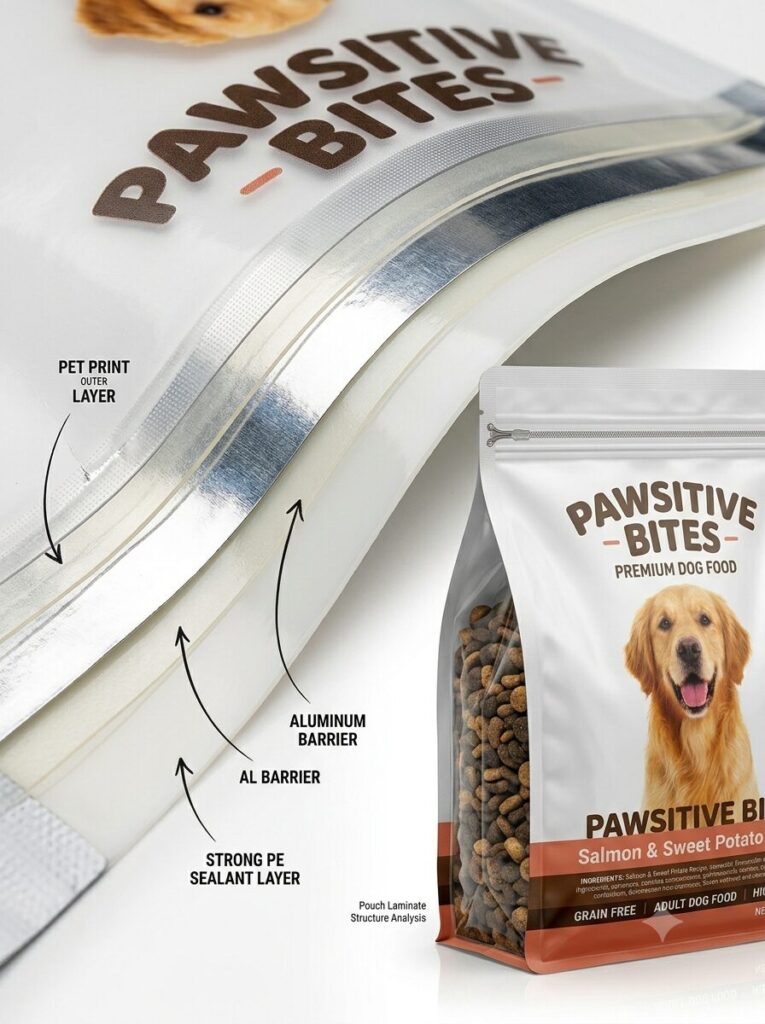
- Barrier Layers: PET + Aluminum or VMPET + PE combinations work well. The aluminum helps with strength while keeping food fresh.
- Puncture-Resistant Films: Some suppliers offer nylon or special high-abuse layers. These make a noticeable difference with sharp kibble.
Stand-up pouches with reinforced side gussets and strong bottom seals hold up better than flat pouches. If you’re using kraft-look bags, make sure they have a strong plastic liner inside — pure paper tears too easily.
I’ve had clients switch to these thicker structures and see tearing complaints drop by over 80%. It’s worth the small extra cost.
Design Features That Prevent Tearing
Smart design choices can make your pet food pouches much tougher.
- Rounded Corners: Sharp corners are weak points. Ask your manufacturer for rounded corners to reduce stress during handling.
- Strong Seals: Wide seals (at least 8-10mm) and high-quality heat sealing prevent bursts at the edges.
- Reinforced Areas: Add extra material or special tape near the zipper and tear notch.
- Zipper Protection: Use heavy-duty zippers and consider shipping with the zipper area protected by a fold or extra layer.
For very large bags, side gussets with extra lamination help the bag keep its shape and distribute pressure better.
One brand I worked with added a simple matte soft-touch finish. It not only looked premium but also reduced slipping between bags on pallets, which indirectly cuts down on abrasion and tearing.
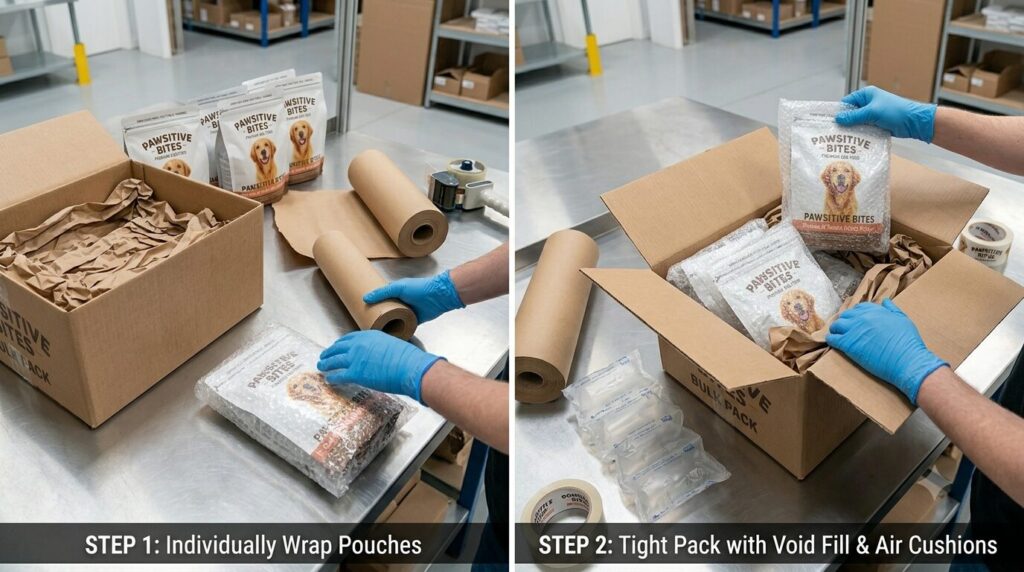
Proper Packing and Palletizing Techniques
How you pack the boxes matters as much as the pouch itself.
- Don’t overfill or underfill. Leave a little headspace so the bag can flex without tension.
- Use void fill. Bubble wrap, air pillows, or kraft paper around the pouches inside the outer box prevents shifting.
- Box strength. Use double-wall corrugated boxes rated for the weight. Test them with your actual filled pouches.
- Pallet arrangement. Stack in interlocking patterns. Use corner protectors and stretch wrap tightly. Consider anti-slip sheets between layers.
- Air release. Some manufacturers add strategic micro-perforations (tiny controlled holes) to let air escape during compression without letting moisture or pests in.
I once visited a client’s warehouse where they were stacking boxes too high without proper strapping. After we changed the palletizing method, their damage rate fell dramatically.
Testing Your Packaging Before Full Shipments
Never assume your pouches will survive shipping — test them properly.
- Drop Tests: Drop filled boxes from 3 feet onto different surfaces (concrete, wood).
- Vibration Testing: Simulate truck transport using a vibration table if possible.
- Compression Testing: Stack weights on boxes to mimic warehouse piling.
- Real-World Trials: Send small test shipments to yourself or trusted customers in different regions.
A good custom pet food pouch manufacturer should offer these testing services or at least provide samples for you to test. At GalePack, we always encourage clients to do real-condition testing before placing large orders.
Track results carefully. Note where tears occur most — top, bottom, sides, or seals. This tells you exactly what needs strengthening.
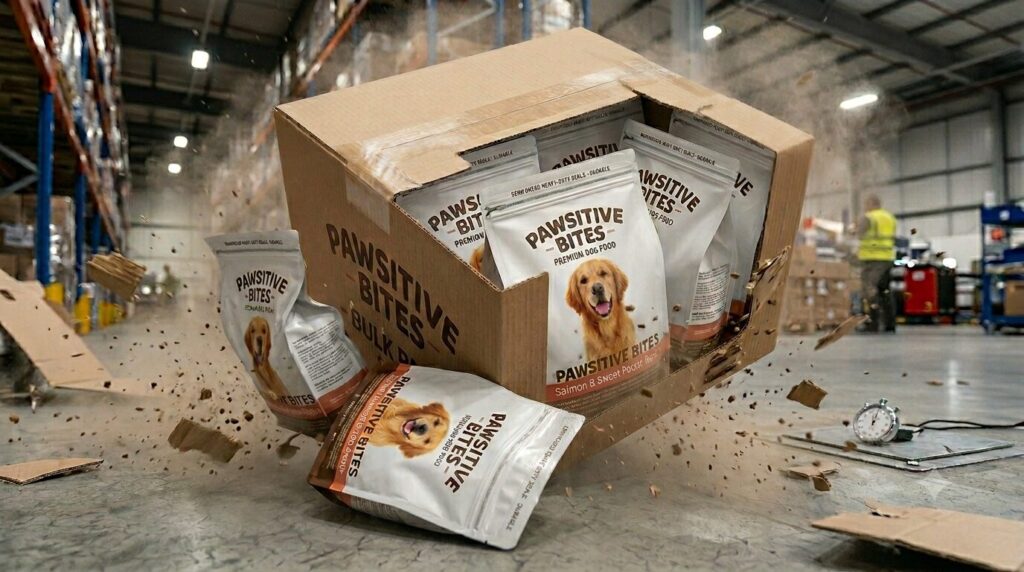
Working with Your Manufacturer for Better Shipping Performance
Communication is key. When you brief your custom food packaging supplier:
- Share your exact product details (kibble size, weight per bag, shipping routes).
- Ask for transportation-specific recommendations.
- Request production samples from the actual machine run, not just lab samples.
- Discuss quality control — they should check seal strength and material integrity on every batch.
Many problems come from switching suppliers without re-testing. Stick with one reliable partner once you find one that works.
Also consider e-commerce specific packaging. Amazon and other platforms have strict ISTA testing standards. Meeting those helps you avoid chargebacks too.
Additional Tips for Long-Distance and International Shipping
Ocean freight and long truck routes add extra stress from humidity and temperature changes.
- Use moisture barrier materials.
- Include desiccants inside outer boxes for humid routes.
- Choose pallet configurations that allow airflow without compromising stability.
- Label boxes clearly with “Fragile” and “This Side Up” even if they’re not technically fragile — it encourages gentler handling.
For international shipments, make sure your pouches meet destination country regulations for food contact materials.
Common Mistakes That Cause Tearing (And How to Avoid Them)
- Using the cheapest option available. It almost always backfires.
- Ignoring temperature effects. Heat can weaken seals; cold can make films brittle.
- Poor secondary packaging. Fancy pouches in weak boxes still fail.
- Skipping ongoing quality checks. Materials and machines can drift over time.
One client learned the hard way after a humid summer shipment. The seals that worked in spring failed in the heat. We adjusted the sealing parameters and material slightly, and the issue disappeared.
Final Thoughts on Protecting Your Pet Food Pouches
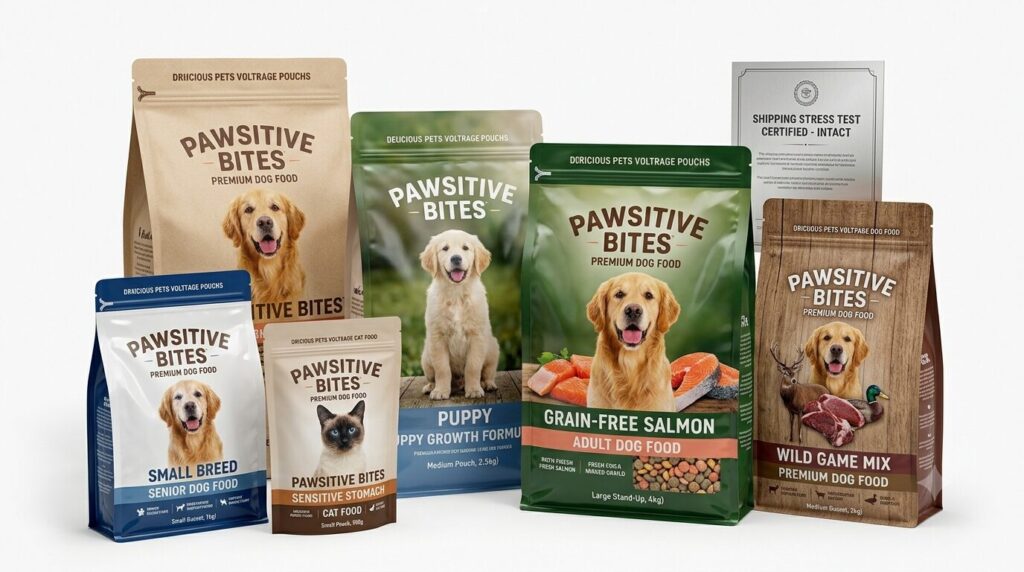
Preventing pet food pouch tearing during shipping comes down to the right combination of strong materials, smart design, careful packing, and thorough testing. When done well, your customers receive perfect packages every time, which builds trust and encourages repeat orders.
If you’re struggling with tearing issues right now, start by auditing your current packaging and running a few drop tests. Small changes can make a big difference.
What kind of pet food are you packaging, and what’s your biggest shipping headache at the moment? Share in the comments — I’d be happy to offer more specific suggestions. Or reach out to us at GalePack for custom pet food pouch solutions that actually survive real-world shipping.
Your pet food deserves packaging that works as hard as you do. Protect it properly, and both your brand and your customers’ pets will thank you.